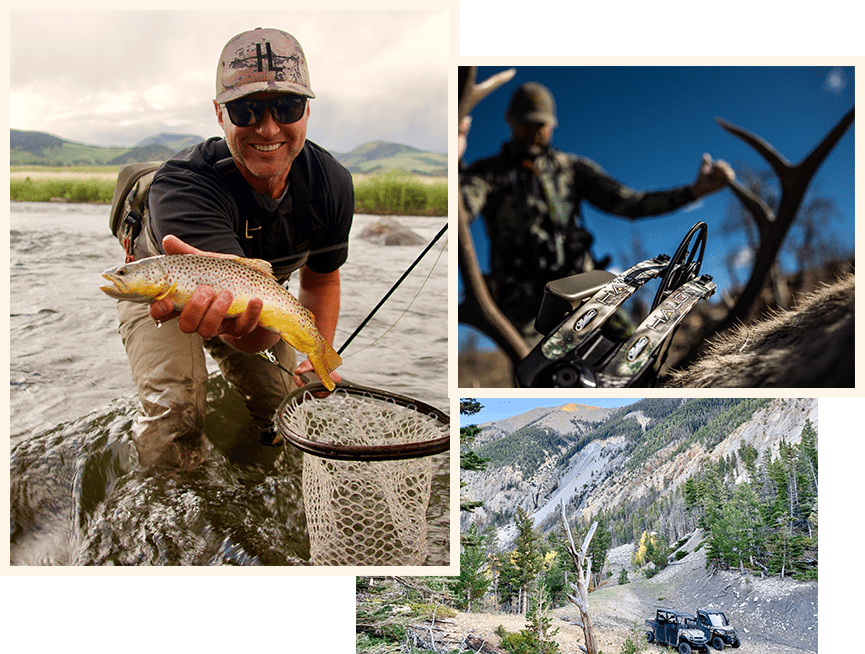
For serious elk hunters searching for Western hunting ranches for sale, buying a ranch in the Mountain West is about much more than finding beautiful acreage in a well-known hunting unit. A ranch can look spectacular in June, have impressive mountain views, abundant timber and plenty of elk photographs from the winter months—and still not be a great archery elk property.
Whether you’re researching New Mexico hunting ranches for sale, Colorado elk properties, Utah hunting land or other ranches for sale throughout the Mountain West, the most important question is whether the property performs during the time of year you actually intend to hunt it.
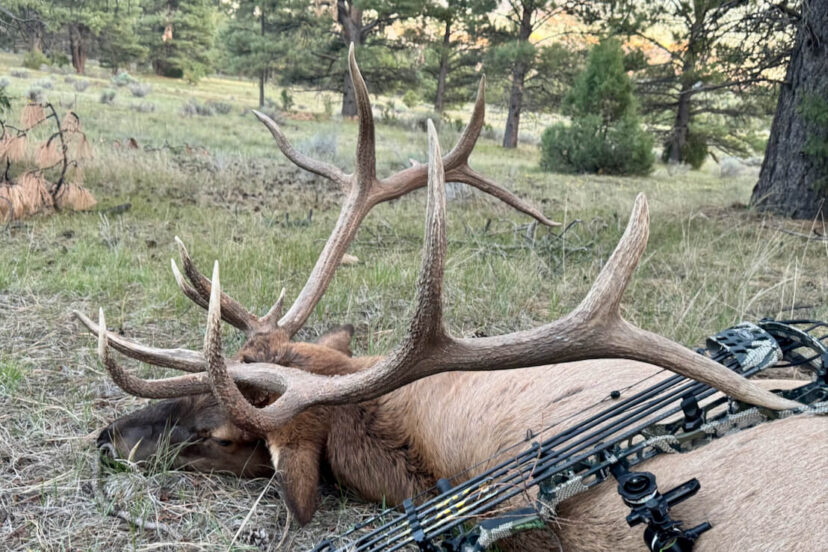
Lookout Mountain Ranch – New Mexico
For an archery elk hunt, that means September.
September is when summer transitions into fall, bulls begin to rut, hunting pressure increases across surrounding public and private lands, and elk movements can change dramatically. A ranch that consistently holds mature bulls during September has a very different recreational value than one that simply has elk passing through at other times of the year.
At Harrigan Land Company, we believe evaluating quality elk hunting ranches for sale requires looking beyond the brochure. Here are some of the most important factors buyers should consider.
Demand Documented September Wildlife
One of the first questions we ask when evaluating an elk hunting property is simple: Where are the elk in September?
Almost every good mountain ranch can produce impressive wildlife photographs at some point during the year. Wintering elk may gather by the hundreds. Bulls can be highly visible during spring green-up. Summer trail cameras may capture impressive animals moving through the property.
Those photographs are useful, but for an archery hunter, they don’t necessarily answer the most important question.
You want to see documented elk activity during archery season.
Ask for trail camera photographs with dates. Look for mature bulls using the ranch consistently throughout September. Pay attention to where those photographs were taken—water sources, wallows, saddles, feeding areas, timber edges and travel corridors.
Several years of September trail camera history can be especially valuable. It can begin to show whether the ranch consistently holds elk during archery season rather than simply catching an occasional bull passing through.
Quality matters, but consistency matters too.
Get on the Ground and Read the Sign
There is no substitute for putting boots on the ground.
When considering hunting ranches for sale, buyers should spend time walking the property and evaluating it from a hunter’s perspective whenever possible. Maps, aerial imagery and trail cameras can tell you a great deal, but elk leave clues that become much more obvious when you’re physically on the ranch.
Look for fresh rubs, wallows, tracks, droppings, beds and heavily used trails. Pay particular attention to rub concentrations and areas that appear to receive repeated use.
Old sign has value because it can demonstrate historical use, but fresh sign tells a much stronger story.
Think like an elk hunter as you walk the property. Where would bulls bed after feeding in the morning? Where are the natural funnels between bedding and feeding areas? Are there secluded benches, dark timber, wallows or springs that could become rutting areas? Can a hunter approach these locations without blowing elk out of the country?
The best elk hunting properties don’t simply have elk. They have habitat that allows hunters to predict how elk will use the property.
Look for Green Grass in September
September forage is another major piece of the puzzle.
A ranch may be brilliantly green during June and early July but look entirely different by the opening of archery season. Depending on elevation, precipitation, soils and water resources, some properties continue producing attractive green forage well into September while others become dry much earlier.
That difference can influence where elk want to spend their time.
Irrigated meadows, productive mountain parks, springs, creek bottoms and other areas that maintain quality forage late into the summer can become tremendous wildlife attractants.
When evaluating Western ranches for sale, don’t just ask what the ranch looks like in the spring.
Ask what is still green in September?
A property that combines quality September forage with nearby security cover and water has several of the fundamental ingredients needed to hold elk during archery season.
Water Can Make the Ranch
Water is always valuable in the West, but during the warm days of early archery season, it becomes particularly important.
Springs, ponds, creeks, seeps and stock tanks can all influence elk movement. Wallows can become focal points as bulls prepare for and enter the rut.
The distribution of that water matters as much as its existence.
A single water source along a ranch boundary may have far less hunting value than multiple reliable water sources distributed throughout secluded portions of a property. Ideally, water is located in places where elk feel secure using it during daylight hours.
When touring elk hunting ranches for sale, find out which water sources are actually running in September. Seasonal water shown on a map isn’t the same thing as dependable water available during a hot, dry fall.
Don’t Overlook North-Facing Cover
One of the most valuable habitat features on a quality archery elk ranch can be good north-facing cover.
September in the Mountain West can still be hot. During warm weather, elk seek places where they can escape the heat and remain secure during daylight hours.
North-facing slopes typically receive less direct sunlight and can support cooler, denser vegetation than exposed south-facing country. Mature timber, aspen pockets, dark draws and shaded benches can provide excellent bedding and security habitat.
A ranch that combines north-facing bedding cover with nearby water and quality feeding areas can give elk fewer reasons to leave.
Look at the ranch from an elk’s perspective. If you were a mature bull in early September, where could you feed, water and spend the heat of the day without traveling very far or exposing yourself?
Those areas deserve serious attention when comparing Western hunting ranches for sale.
Understand Hunting Pressure Beyond the Property Lines
Elk don’t recognize property boundaries.
That’s why evaluating the surrounding landscape is just as important as evaluating the deeded acreage.
Find out what happens on neighboring private ranches and adjacent public lands during September. Heavy hunting pressure can completely change elk movements once archery season begins. In some situations, pressure on neighboring properties can push elk onto a well-managed private ranch. In others, it can pull animals away.
Access points, outfitter activity, public trailheads, neighboring ranch management and refuge areas can all influence the equation.
A relatively modest-sized ranch located in exactly the right position can sometimes hunt much larger than its deeded acreage would suggest. Conversely, thousands of acres in the wrong location may not consistently hold mature bulls during the season.
Understanding that larger landscape is critical when evaluating elk hunting land for sale.
Talk With Local Game Wardens and Wildlife Biologists
Before purchasing a serious hunting property, do your homework with the people who spend their careers watching wildlife in that area.
Local game wardens and wildlife biologists can be excellent sources of information about the surrounding elk herd. Ask about seasonal herd movements, population trends, hunting pressure, harvest success, trophy quality and how elk respond once hunting seasons begin.
Questions might include:
- Where do elk typically spend August and September?
- Does the area hold elk year-round or primarily during certain seasons?
- How does hunting pressure affect herd movement?
- Are mature bulls regularly harvested in the area?
- What have recent hunter success rates looked like?
- Are herd numbers increasing, stable or declining?
- Where are the major summer, rutting, transition and winter ranges?
These questions become especially valuable when researching unfamiliar areas or comparing New Mexico hunting ranches for sale with elk properties elsewhere in the Mountain West.
No single conversation should determine whether you buy a ranch, but combining local biological knowledge with trail camera history, harvest records and your own observations can give you a much clearer picture of the property’s true hunting potential.
Evaluate the Ranch for the Season You Want to Hunt
This may be the most important principle of all.
Elk country is dynamic.
The ranch holding hundreds of elk in January isn’t necessarily the ranch you want to own for a September archery elk hunt. Likewise, an outstanding September property may hold relatively few animals during other parts of the year.
Elevation, forage, water, snow depth, hunting pressure, rut activity and surrounding land ownership all influence elk movements throughout the Mountain West.
If your dream is chasing bugling bulls with a bow, evaluate the ranch specifically through that lens.
Ideally, visit it during September.
Listen for bugles at daylight. Glass feeding areas. Walk timber edges. Check water and wallows. Examine rubs. Look at trail camera history. Determine whether mature bulls are merely moving through the ranch or actually spending meaningful time there.
A September visit can reveal things that are almost impossible to understand during a traditional summer property tour.
Four Western Hunting Ranches for Sale Worth a Closer Look
For buyers actively searching for Western hunting ranches for sale, Harrigan Land Company currently represents four properties that deserve consideration from serious elk hunters.
Long Hollow Ranch — Woodruff, Utah
At approximately 7,000 deeded acres, Long Hollow Ranch in northern Utah provides the scale and habitat diversity serious big-game hunters look for. Elevations range from roughly 7,000 to 8,400 feet, with spruce-covered north-facing slopes, aspen groves, sagebrush country and year-round Woodruff Creek, supplemented by springs and tributaries. The ranch participates in Utah’s CWMU program and provides annual hunting tags for elk, mule deer and moose.
For buyers comparing large Western hunting ranches for sale, Long Hollow Ranch illustrates the importance of diverse elevation, water, north-facing security cover and enough acreage to accommodate seasonal wildlife movements.
Sentinel Peaks Ranch — La Veta, Colorado
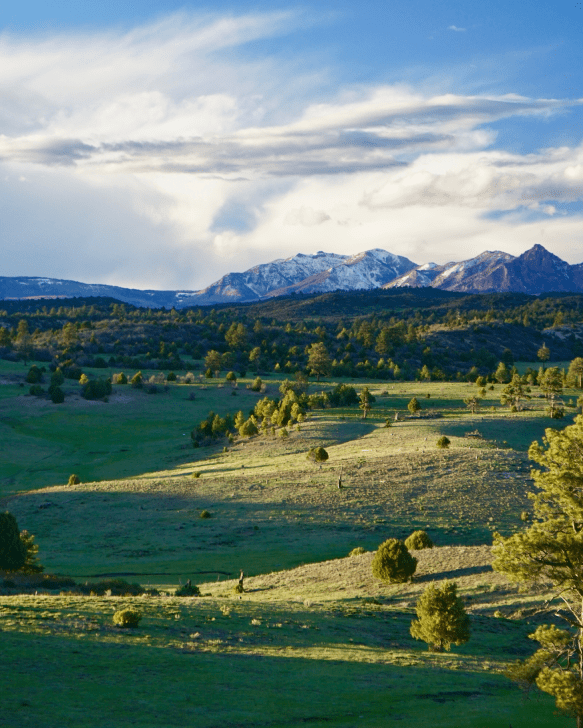
Located near La Veta in southern Colorado, Sentinel Peaks Ranch is another property worth considering for buyers focused on quality big-game habitat and private-land hunting opportunities. Set against the dramatic backdrop of the Spanish Peaks, the ranch lies in an area known for elk and other big game, offering the combination of mountain habitat, cover, water and open feeding country that serious hunters should evaluate when searching for a Western ranch. For buyers comparing Colorado ranches for sale, Sentinel Peaks Ranch is a good example of why it is important to look beyond acreage and scenery and consider how wildlife actually uses a property during hunting season—particularly during the September archery elk hunt. Buyers should evaluate current and historical elk use, trail-camera evidence, water and forage conditions, bedding and north-facing security cover, neighboring hunting pressure and the ranch’s position within broader seasonal elk movements.
Lookout Mountain Ranch — Grants, New Mexico
Located in the Zuni Mountains of western New Mexico, Lookout Mountain Ranch encompasses more than 3,000 deeded acres and is nearly surrounded by National Forest. The ranch offers trophy elk hunting and currently comes with six landowner bull elk tags. Its combination of varied habitat, abundant water and access to a much larger surrounding ecosystem makes it an excellent example of why location can matter as much as deeded acreage.
For buyers searching specifically for New Mexico hunting ranches for sale, Lookout Mountain Ranch offers the combination of private land, elk habitat and hunting opportunity that makes western New Mexico such an attractive destination for serious hunters.
Explore Lookout Mountain Ranch
Agua Fria Ranch — Chama, New Mexico
The Agua Fria Ranch offers approximately 1,570 deeded acres in the San Juan Mountains near Chama. The property combines excellent elk habitat with substantial water resources, including roughly two miles of year-round creeks as well as springs, wells and dirt tanks. It currently offers 12 landowner elk tags, giving serious hunters an attractive combination of habitat and hunting opportunity.
The Chama region has long attracted buyers looking for New Mexico elk hunting ranches for sale, and Agua Fria Ranch demonstrates many of the habitat characteristics buyers should prioritize when comparing trophy hunting properties.
These four properties are different in acreage, geography and hunting structure, but each illustrates an important point: the best archery elk ranch isn’t determined by acreage alone. Habitat, water, cover, surrounding land, seasonal elk movement and dependable access to hunting opportunities all need to be evaluated together.
Work With a Ranch Broker Who Understands Elk Hunting
Finally, recognize that evaluating a trophy hunting ranch requires a different level of expertise than evaluating conventional rural real estate.
At Harrigan Land Company, hunting isn’t simply an amenity we list in a property brochure. We are hunters ourselves, and decades spent throughout the Mountain West have taught us that two ranches for sale located only a few miles apart can offer dramatically different hunting opportunities.
An experienced hunting ranch broker should understand local trophy quality, herd densities, hunting pressure and seasonal elk movements. They should know which areas traditionally produce mature bulls and, equally important, where those bulls are likely to be during the specific weeks you intend to hunt.
That knowledge becomes especially valuable when comparing New Mexico hunting ranches for sale, Colorado elk ranches, Utah hunting properties and other Western hunting ranches for sale. Elk respond differently to elevation, climate, habitat, hunting pressure and seasonal conditions throughout the West. Understanding those differences can help a buyer separate a beautiful ranch that occasionally has elk from a truly exceptional elk hunting property.
The goal isn’t simply to buy acreage inside a good elk unit.
It’s to own the right ground, in the right location, at the right time of year.
For an archery hunter, that means finding a ranch with documented September wildlife, dependable water, quality late-season forage, cool security cover, favorable surrounding hunting pressure and a proven history of holding mature bulls when September arrives.
Those are the ranches that can create extraordinary hunting experiences—and become Western properties a family can enjoy for generations.
If you’re searching for elk hunting ranches for sale, New Mexico hunting ranches for sale, or Western hunting ranches for sale, Harrigan Land Company can help identify properties where habitat, seasonal elk movement and proven hunting potential come together.